
Find Washington Police Records
Washington police records are public documents that law enforcement agencies across the state are required to make available under the Public Records Act. You can search these records through the Washington State Patrol, your county sheriff's office, or a local police department depending on where the incident occurred. This page explains where to look, how to submit a request, what types of police records exist in Washington, and what access rules apply to criminal history and arrest records statewide.
Washington Police Records Overview
How to Search Washington Police Records
Washington gives you several ways to find police records. The right starting point depends on what you need. Criminal history and background checks go through the Washington State Patrol. Incident reports and sheriff records come from the agency that filed the report. Court records live in the Washington Courts system. Each of these is a separate database, and none of them automatically connects to the others.
The Washington Courts Name and Case Search lets you look up case information across most Superior Courts in the state. You can search by party name or case number. The system shows case status, hearing dates, and docket entries. It is free and covers criminal, civil, and family cases. Copies of documents must be requested from the court of record directly. This tool is a good first step when you want to confirm whether charges were filed or how a case ended.
For law enforcement records outside of court files, you go to the agency that created the record. If an arrest happened in an unincorporated area, that is the county sheriff. If it was inside city limits, that is the municipal police department. Collision reports are handled differently. Most go to the Washington State Patrol Collision Records Section regardless of which agency was at the scene. Knowing this saves you from contacting the wrong office.
The Washington Courts case search portal is the official statewide tool for accessing court-connected records, including criminal cases linked to police reports and arrest filings.
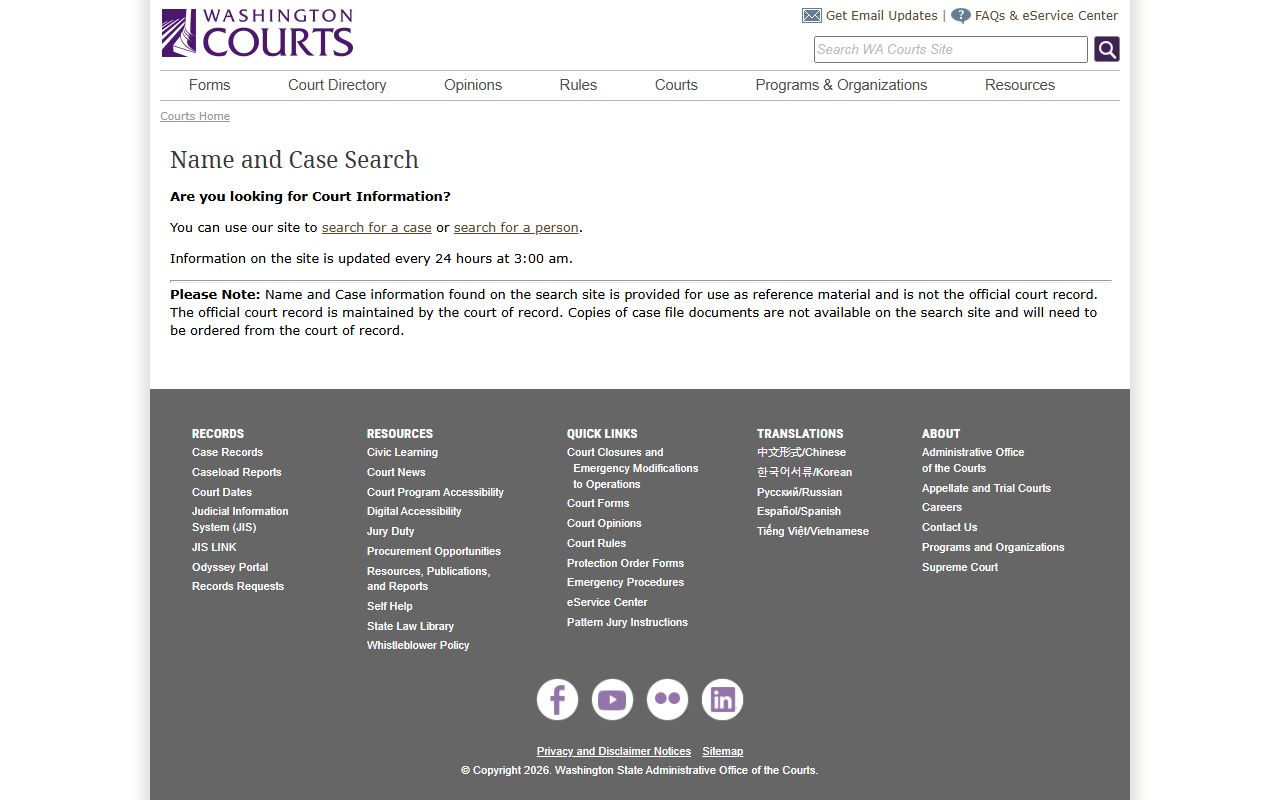
This portal covers most county Superior Courts. It does not include full document images, but it confirms whether a case exists and provides docket details that can help you locate the right court for a records request.
Washington State Patrol Criminal History Records
The Washington State Patrol is the central repository for criminal history record information in Washington. The WSP maintains the official statewide database, which includes fingerprint-based records and disposition information submitted by courts and law enforcement agencies across all 39 counties. Anyone who needs a background check or a copy of their own criminal record starts here.
The WATCH system, short for Washington Access to Criminal History, is the online tool for instant background checks. It costs $11.00, payable by credit or debit card, and results come back immediately. WATCH shows conviction information, arrests less than one year old with pending dispositions, and information about registered sex and kidnapping offenders. You can access it at fortress.wa.gov/wsp/watch. The system does not report out-of-state convictions, but it covers all Washington convictions including juvenile adjudications.
The WATCH online criminal history system is the fastest way to get a Washington background check, returning instant results for the $11 fee paid by card online.
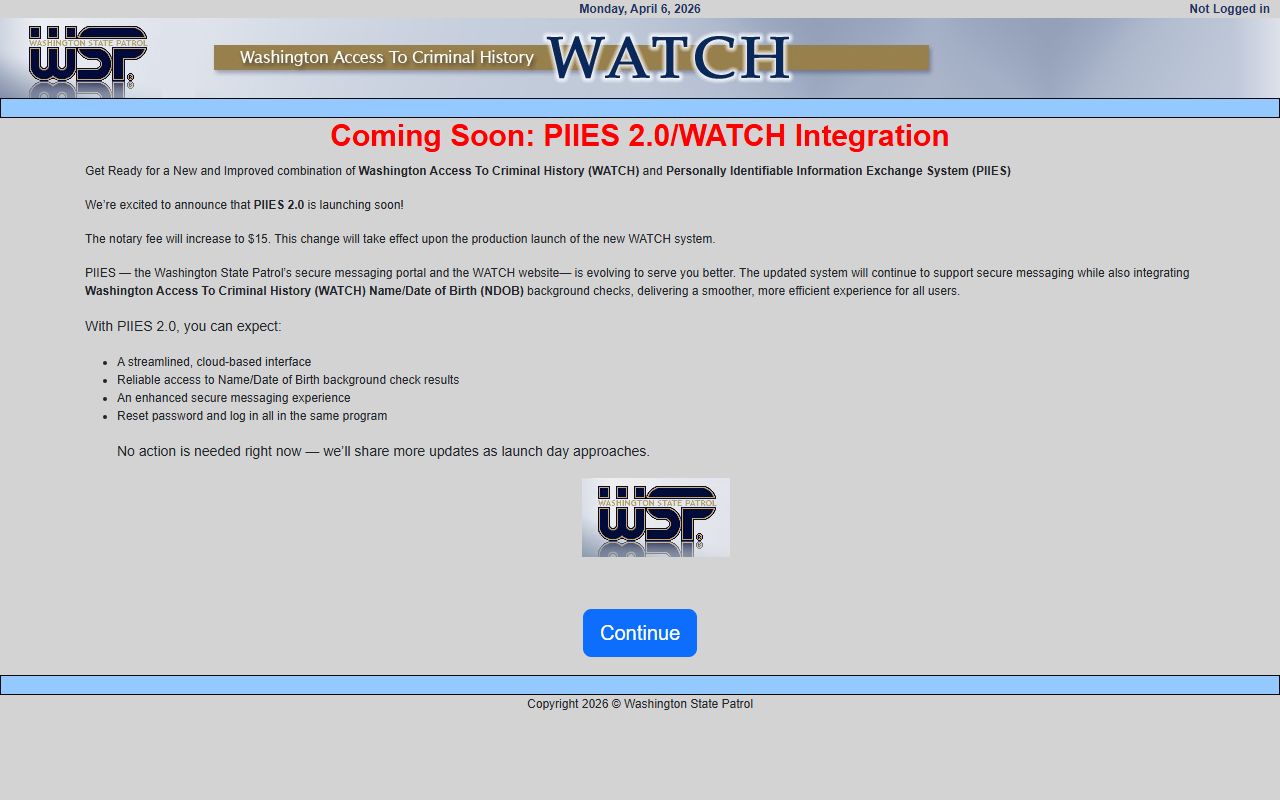
For billed or nonprofit accounts, organizations can apply by mail to the WSP Identification and Background Check Section at PO Box 42633, Olympia, WA 98504-2633, or by emailing WATCH.Help@wsp.wa.gov.
Mail-based criminal history requests are also accepted. A name and date-of-birth check costs $32.00. A fingerprint-based check costs $58.00. A notarized letter costs an additional $10.00. In-person requests can be made at the Olympia office at 106 11th Ave SW, Suite 1300, Olympia, WA 98501. Mail requests take longer than the online option, so if timing matters, WATCH is the better route.
The WSP Criminal History Records page covers every available method for obtaining a background check in Washington, along with fee schedules, mailing addresses, and links to required forms.
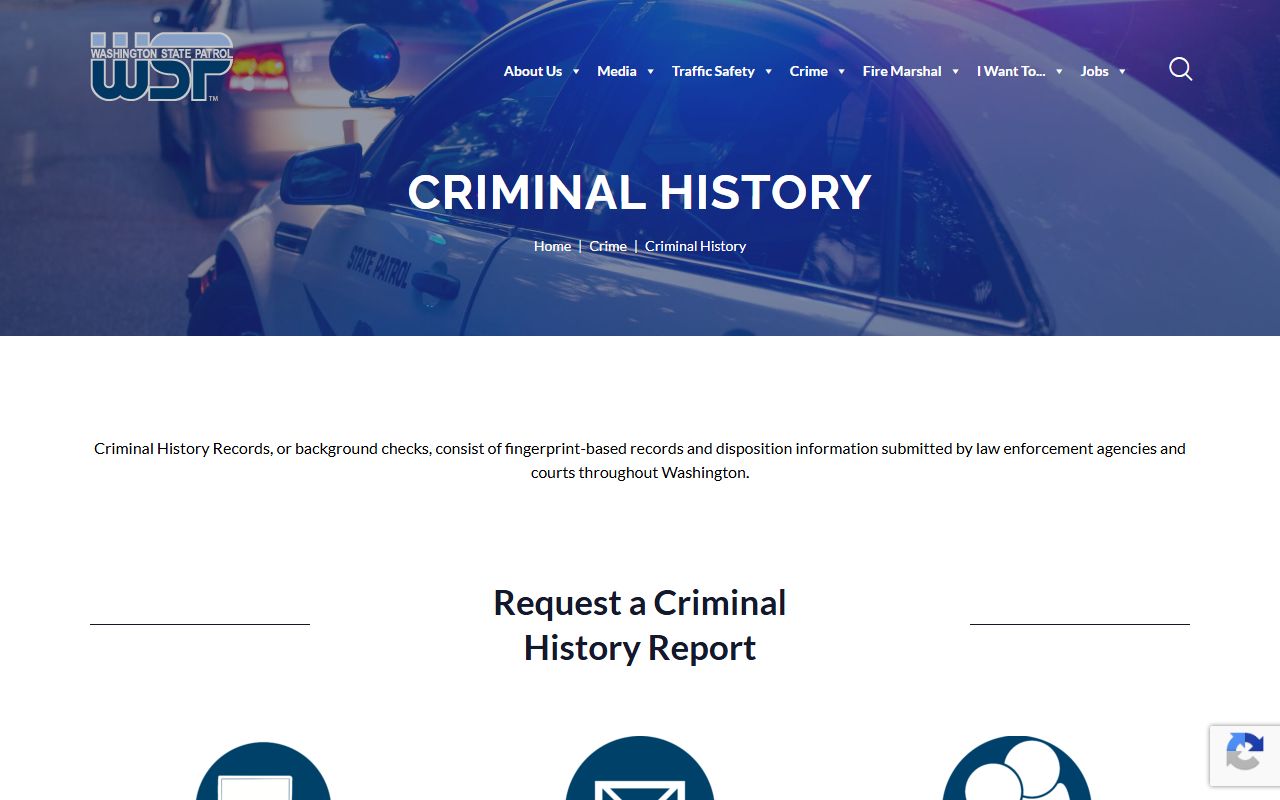
The WSP also runs a Compromised Identity Claim program that helps victims of identity theft who may have another person's criminal record appearing under their name in the state database.
Collision Reports and Traffic Police Records in Washington
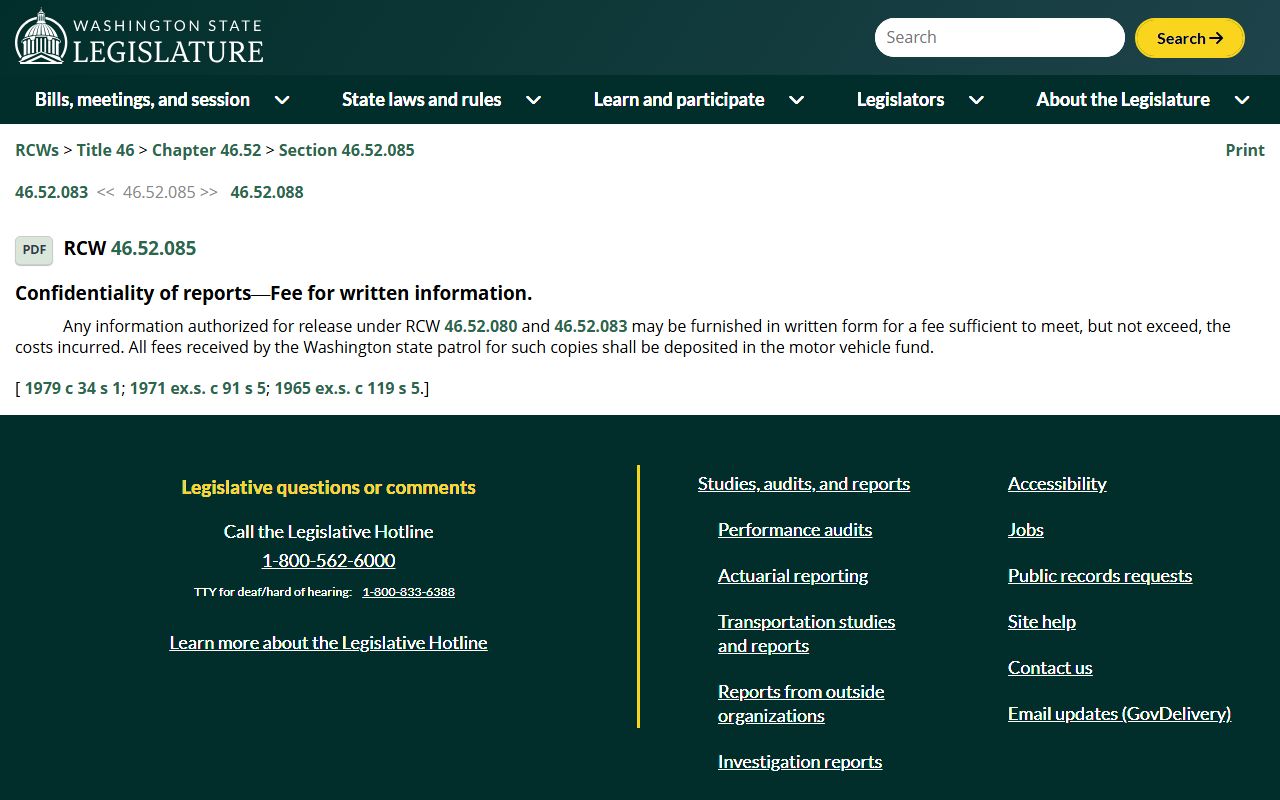
Washington collision reports are filed with the WSP and held there as the central repository. Under RCW 46.52.085, every officer who investigates a crash must file a written report within four days. The fee for a copy is $10.50. Reports are generally available within two to four weeks after the crash, though they sometimes come through sooner depending on how quickly the officer completes the investigation.
The WSP Collision Records Section runs the WRECR system, short for Washington Requests for Electronic Collision Records, which lets you search for and order crash reports online. A kiosk is also available in the WSP lobby in Olympia. The WSP does not give out collision information over the phone, so requests must go through the online system or the kiosk. Certified copies take five to seven business days after submission.
The WSP WRECR online collision records portal allows requesters to search and order crash reports electronically, with a kiosk option also available at the WSP Olympia facility.
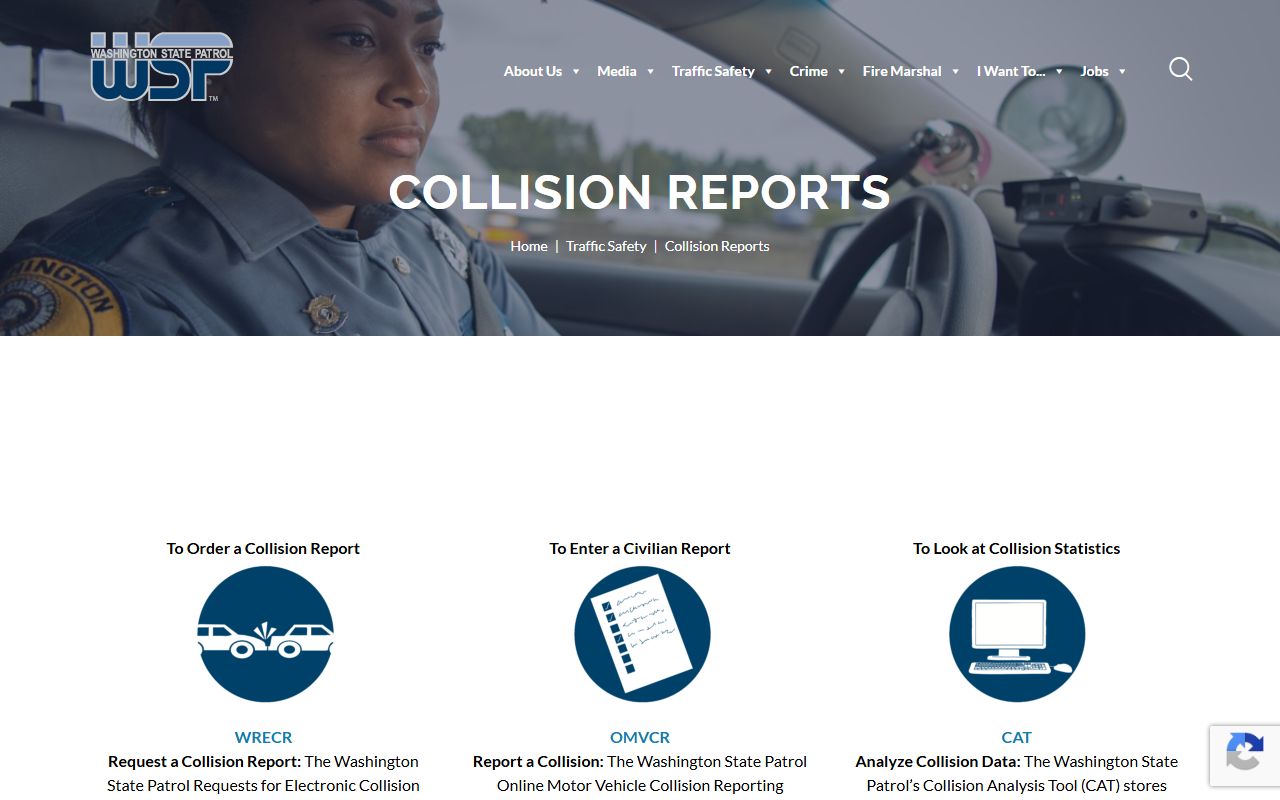
Side coding overlays are provided on the WSP website to help requesters understand the coded fields on collision reports, with different overlays for crashes before and after January 1, 2022.
The text of RCW 46.52.085 sets the legal requirements for collision reporting, including which crashes require a report, the four-day filing deadline, and the $10.50 fee for copies.
Driving record abstracts are a separate matter handled by the Department of Licensing, not the WSP. Contact DOL at 360-902-3900 if you need to correct a driving record rather than obtain a collision report.
The Washington Public Records Act and Police Records
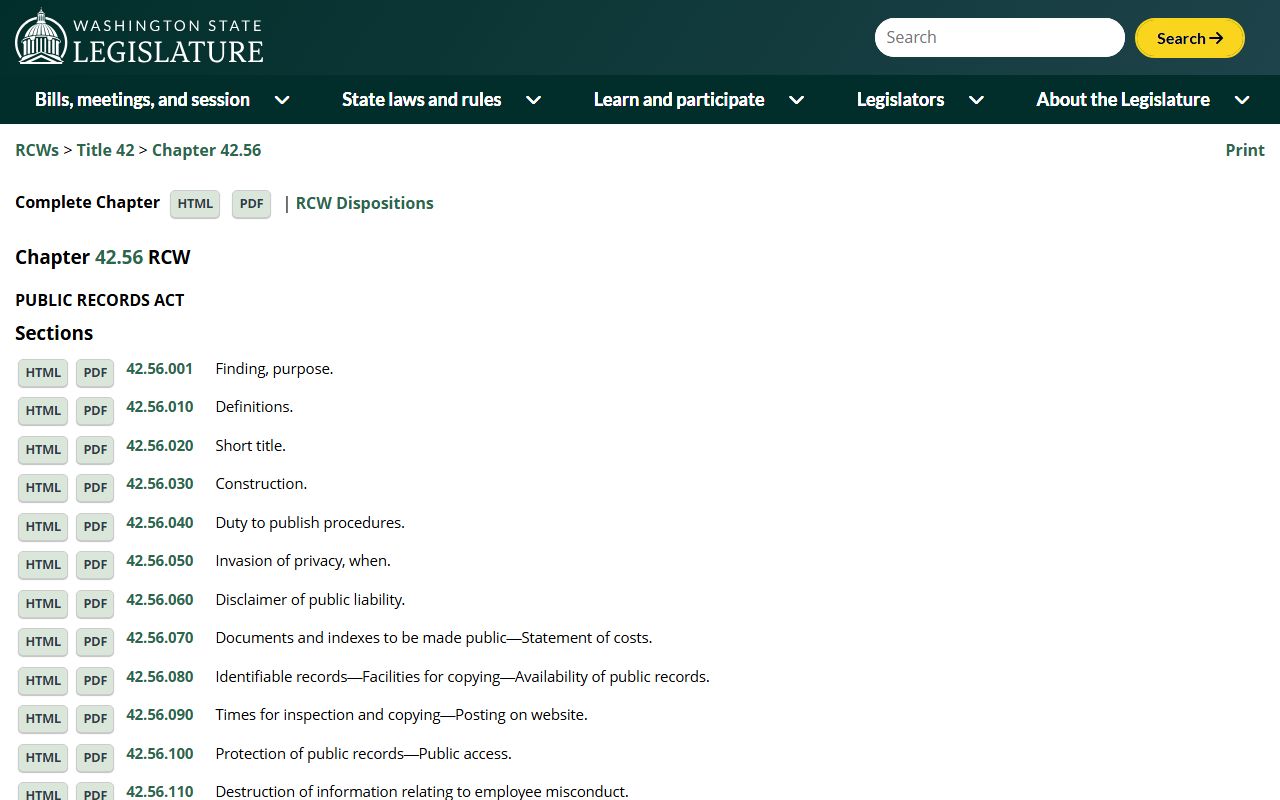
Chapter 42.56 RCW, the Public Records Act, is the law that governs access to police records in Washington. The Act declares that public records are available for inspection unless a specific exemption applies. Law enforcement agencies must respond to requests within five business days. That response can be the records, an acknowledgment with a timeline, a request for clarification, or a denial citing the specific exemption applied. The Act is construed broadly in favor of disclosure, and exemptions are read narrowly.
The full text of the Washington Public Records Act is posted on the state legislature's website and is the authoritative source for understanding public access rights, exemptions, and agency obligations statewide.
Courts in Washington have consistently held that any doubt about whether a record should be released must be resolved in favor of release, which is a key protection for people seeking police records.
The Washington Association of Sheriffs and Police Chiefs notes that a valid public records request must include a reasonable description of the records sought. A general question is not a public disclosure request. You do not need to state a reason for your request. You do not need to be a Washington resident. Requests can be submitted in writing by mail, email, fax, or in person at the agency.
The WSP Public Disclosure Records portal allows anyone to file a records request with the State Patrol for administrative files, investigative files, photos, body camera footage, and other law enforcement records maintained by WSP.
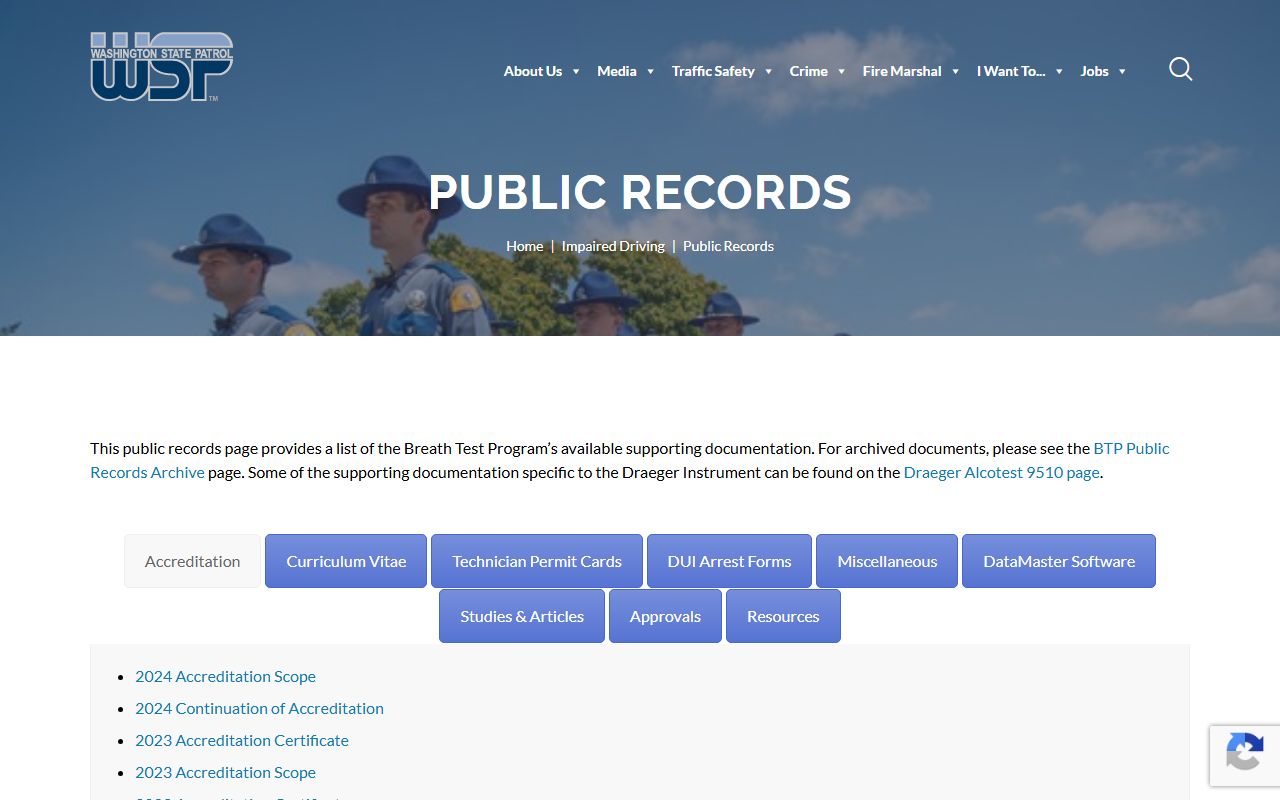
Requests submitted through the WSP portal are tracked online, and the Public Records Officer provides written confirmation of receipt within five business days as required by statute.
Arrest Records and Criminal History Access in Washington
Washington law draws a firm line between conviction records and non-conviction records. Under RCW 10.97, the Criminal Records Privacy Act, conviction data can be copied and shared freely. Non-conviction data, meaning arrests that did not lead to a conviction, is treated differently. Under RCW 10.97.080, the public can view non-conviction data at a law enforcement office, but cannot generally obtain copies or take that data and share it. When a rap sheet includes both conviction and non-conviction entries, agencies must redact the non-conviction portions before release.
There is an exception for pending cases. Per the MRSC Law Enforcement Records guide, portions of a record involving an actively pending case can be disclosed. A case is presumed no longer pending if more than one year has passed since the arrest, citation, charge, or service of warrant. So a recent arrest with no final outcome may be available, while an old arrest that never led to charges is generally not copyable under state law.
The MRSC guide to criminal history and arrest records is a detailed resource used by Washington agencies statewide to understand their obligations when handling requests for criminal history record information.
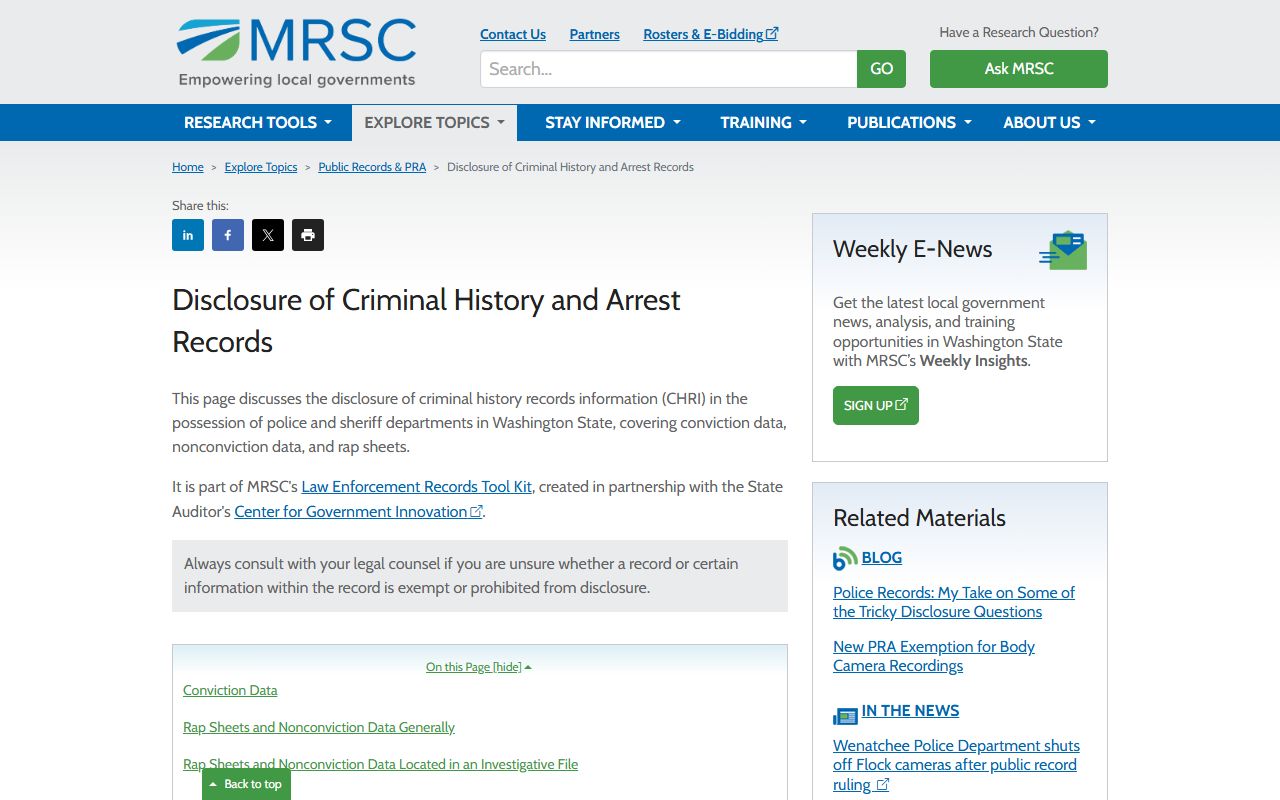
The MRSC toolkit reflects current legal interpretations, including court decisions like Bainbridge Island Police Guild v. City of Puyallup, which clarified the public viewing versus copying distinction for non-conviction data.
The Criminal Records Privacy Act at RCW 10.97 sets the full framework for who can access criminal history record information, under what conditions copies can be made, and when agencies have discretion to share information with crime victims.
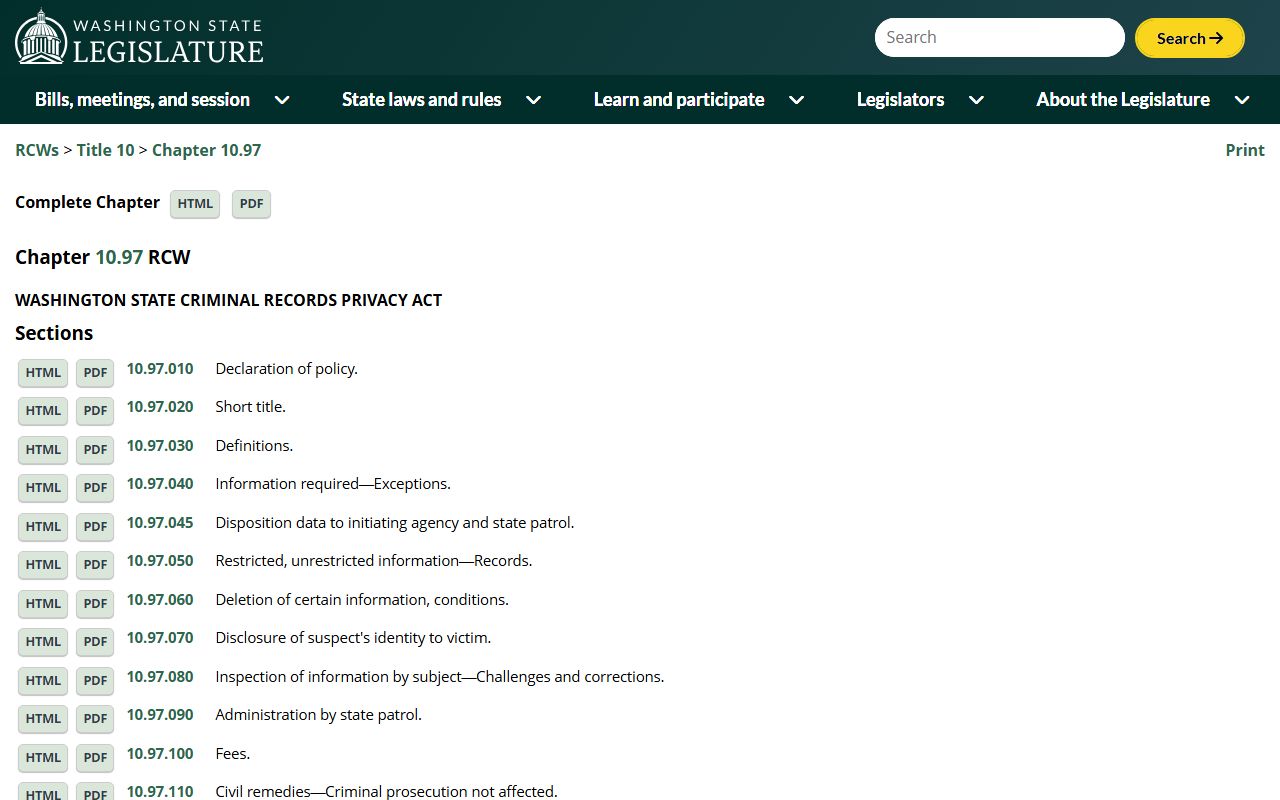
Under RCW 10.97.070, an agency may disclose non-conviction data to a victim when the information may help them pursue civil remedies against the person responsible for their injury or loss.
Traffic and Vehicle Police Records in Washington
Traffic accident reports from law enforcement are generally public records. Court precedent confirms that crash reports are subject to disclosure under the Public Records Act. However, the MRSC guide on traffic accident records notes that reports compiled for federal dangerous road evaluation programs under 23 U.S.C. § 152 are exempt. Photos and personally identifying data from automated traffic cameras, like red light and school zone speed cameras, cannot be released under RCW 46.63.220(11).
The MRSC traffic accident and vehicle records resource explains the legal standards for releasing crash reports, driver information, and vehicle registration data in Washington.
Driver's license abstracts are protected by RCW 46.52.130 and can only be released to the person named in the abstract or authorized entities under a Department of Licensing contract, not to the general public.
Vehicle owner names and home addresses are also protected in most situations under RCW 46.12.635. This is a meaningful limit when you are trying to identify a vehicle owner through a police report. The report itself may be available, but the registration data attached to the vehicle is generally withheld unless you fall within one of the specific exceptions in state law.
Personal Information Protections in Washington Police Records
Certain personal details are protected even in otherwise public police records. Driver's license numbers are generally exempt under RCW 42.56.230(5). Social security numbers are protected under the same provision. Under RCW 42.56.240(2), the identifying information of crime victims and witnesses can be withheld if the victim requested non-disclosure at the time of the complaint, or if releasing the information would create a safety risk. Agencies must show specific evidence of that risk to justify the withholding.
The MRSC guide on personal identifying information explains which details agencies must redact from police records before releasing them, and how those protections interact with broader public access rights.
These protections mean that public copies of police reports often contain redactions for specific numbers and personal details, which is legally required even when the rest of the record is fully disclosable under RCW 42.56.
Types of Washington Police Records
Washington law enforcement agencies create and hold many types of records. Incident reports and general offense reports document crimes and calls for service. Arrest records show when a person was taken into custody. Jail booking records capture who was booked into a county or city jail, along with the charges and booking date. Collision and accident reports document traffic crashes. Body camera footage is now common in many agencies. Internal affairs logs, use of force data, and 911 recordings are also kept, though some have restricted access periods.
The Washington State Archives publishes Law Enforcement Records Retention Schedules that set minimum storage periods for each type of record. Incident reports must be kept at least six years. Collision reports have a 10-year retention at the WSP. Investigative files vary based on the outcome of the case. Knowing these schedules helps you understand what records an agency is likely to still have available when you make a request.
- Incident and general offense reports
- Arrest records and jail booking logs
- Traffic collision reports and crash data
- Body camera and in-car video footage
- 911 call recordings, typically retained about 90 days
- Concealed pistol license application records
- Use of force reports and internal affairs records
How to Request Washington Police Records
A public records request must be in writing. You can submit by online portal, email, fax, mail, or in person. Be as specific as possible. Include names, dates, incident locations, case numbers, and any other identifying details you have. The more precise your request, the faster the agency can locate the records. Do not include sensitive personal data like social security numbers in your submission.
The WSP "I Want To" services portal provides direct links for requesting criminal history records, filing public disclosure requests with the State Patrol, and accessing other law enforcement services from one place.
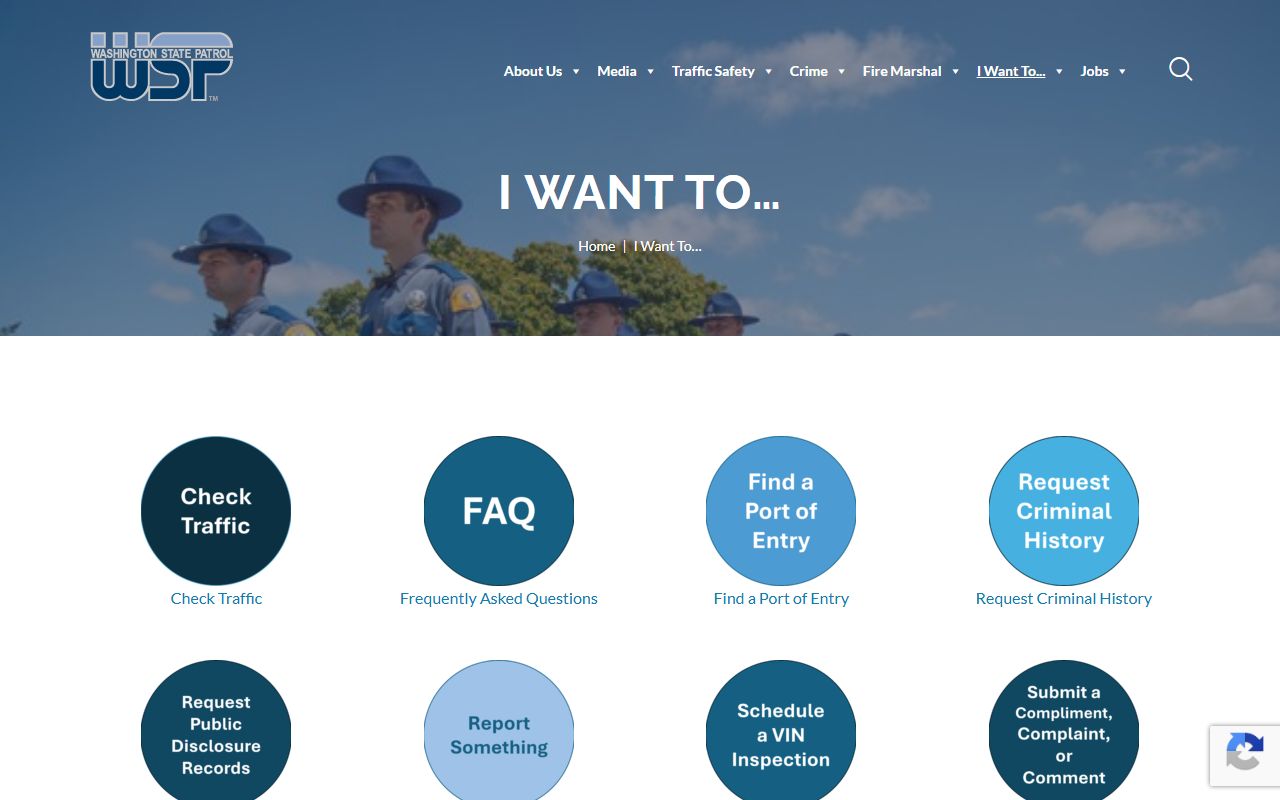
This portal is a useful starting point when you are unsure which WSP department handles the specific type of police record you need, as it organizes services by common task rather than by office name.
Every agency must respond within five business days. That response could be the records, an acknowledgment with an estimated timeline, a request for clarification, or a denial with the specific exemption cited. For large requests, the agency can respond in installments. Many county sheriffs and city police departments use platforms like GovQA, NextRequest, or JustFOIA. These systems assign tracking numbers and send email updates when records are ready for download or pickup.
Fees for copies are set by each agency's fee schedule. Inspecting records in person is generally free. Paper copies run around $0.15 per page. Scanning fees are typically $0.10 per page. Body camera footage redaction fees vary widely. Some agencies charge $0.49 to $0.90 per minute of redaction time. For large video requests, these costs can add up, and agencies may ask for a deposit before processing.
The Washington State Attorney General's Office publishes model rules for public records requests and operates an Open Government Ombuds program. If an agency denies your request and you believe the denial is improper, the Ombuds can help resolve the dispute without going to court. The AG also publishes training resources for agencies that explain how the Public Records Act should be applied to law enforcement records.
Browse Washington Police Records by County
Each of Washington's 39 counties has its own sheriff's office and local police agencies handling records. Select a county below to find contact information, request portals, and resources specific to that area.
View All 39 Washington Counties
Washington Police Records by City
Police records in Washington cities are handled by local police departments or by the county sheriff under contract. Select a city to find how to request records and which agency to contact in that area.