
Access Clallam County Police Records
Clallam County police records are managed by the Clallam County Sheriff's Office, which covers law enforcement for all unincorporated areas of this Olympic Peninsula county. You can request police records in person at the Sheriff's Office, by calling 360-417-2432, or through the county's online public records portal. Requests are handled under Washington's Public Records Act and must receive a response within five business days.
Clallam County Police Records Overview
Clallam County Sheriff's Office Records
The Clallam County Sheriff's Office is the main law enforcement agency for unincorporated areas of Clallam County on the Olympic Peninsula. The Support Services division within the Sheriff's Office handles public records requests and maintains the office's law enforcement documentation. The Sheriff's Office can be reached at 360-417-2432 for records-related inquiries. Port Angeles, Sequim, and Forks all have their own police departments, so records from incidents inside those city limits belong to the city agency, not the Sheriff.
The Clallam County Sheriff's main page provides an overview of the office's divisions and services. The Sheriff's Office maintains incident reports, arrest records, jail booking logs, and related documentation for all unincorporated county areas. Records held by the county courthouse, including criminal and civil court files, are separate from Sheriff's Office records.
How to Request Clallam County Police Records
The Clallam County Sheriff's Office FAQ page lays out three ways to request police records. You can visit the Sheriff's Office in person in Port Angeles. You can call the Records Division at 360-417-2432. Or you can use the online public records portal available through the county. The Sheriff's FAQ page walks through what happens after you submit a request and what to expect from the process.
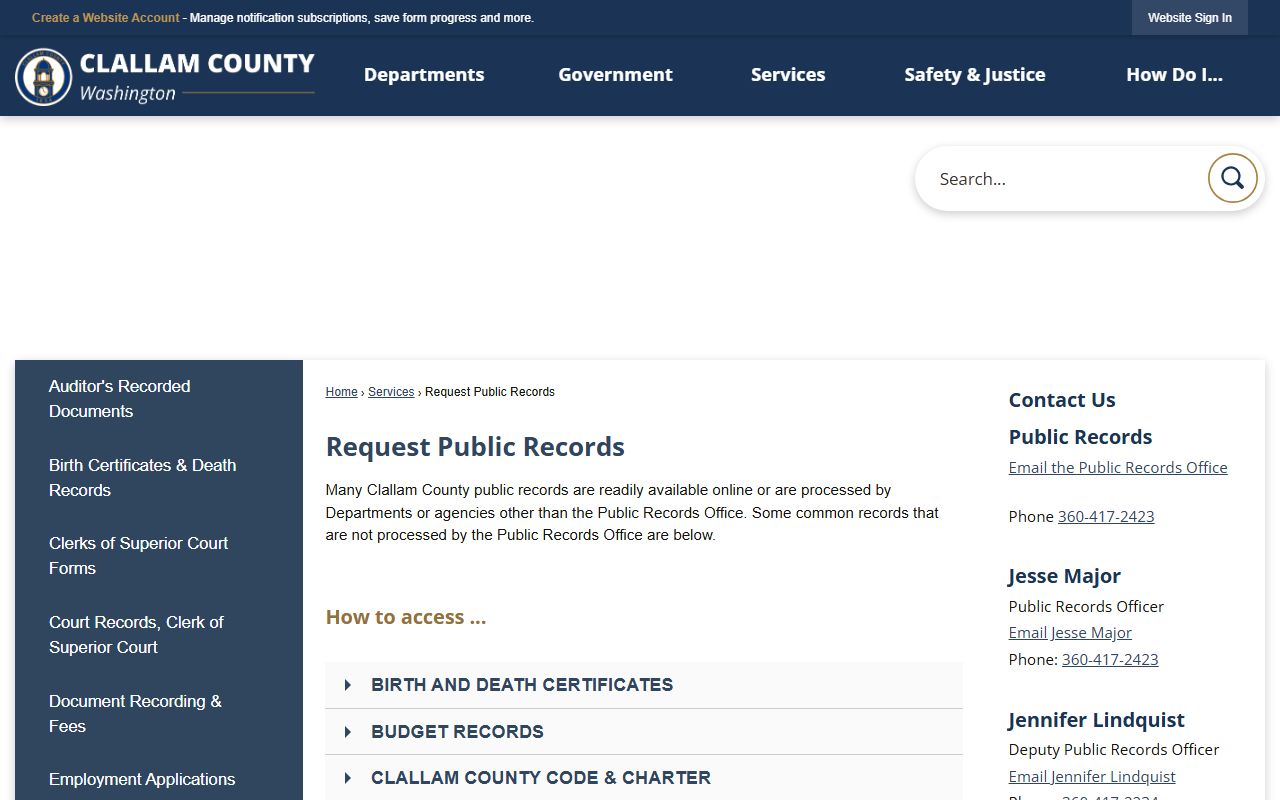
The county's general public records request page at clallamcountywa.gov is also a valid starting point. You can email or call 360-417-2423 to reach the Public Records Office for general county requests. Keep in mind that many county records are processed by individual departments rather than a single central office. Sheriff's Office records go through the Sheriff; court records go through the clerk; other county records may have their own channels.
Under RCW 42.56, the county has five business days to respond. They can provide the records, give you an estimate of when they'll be ready, ask for clarification, or explain if a record is exempt. If part of a record is exempt, they must still provide the rest after redacting the protected information.
Clallam County Personal Criminal History Records
One service the Clallam County Sheriff's Office provides through its Support Services division is a personal criminal history check. The fee for this service is $10.00, and you must present a photo ID when you make the request. This check only covers records held by the Clallam County Sheriff's Office. It does not include records from Clallam County's city police departments. It does not include records from other Washington counties. It is a county-only document.
For a broader check, the criminal history terminals inside the courthouse lobby provide access to Clallam County Superior Court and District Court records. For a full statewide criminal history, you need the WSP WATCH system. For local court information, courthouse terminals are free to use during business hours. Understanding what each source covers helps you get the right record for your situation.
Statewide Criminal History and the WATCH System
Washington State's criminal history system is run by the Washington State Patrol. The WATCH system gives you access to statewide criminal history records for $11 per search. WATCH results come back right away after you pay online. The database covers all Washington counties and all types of offenses recorded in the state system. This is a better option than a county-only check if you need a comprehensive picture.
The WSP Criminal History Records page explains what types of offenses appear in WATCH results and how to interpret the information. Criminal records are also governed by RCW 10.97, which divides records by category and sets different disclosure rules based on whether a conviction was final, a case is still pending, or an arrest did not lead to charges. These distinctions affect what the public can see versus what is limited to criminal justice agencies.
Collision Reports in Clallam County
Crash reports from Clallam County roads are handled by the Washington State Patrol. WSP's WRECR system lets you order a collision report online through the WSP collision records page for $10.50. You will need the date of the crash, the location, and the names of the people involved. These reports are governed by RCW 46.52.085, which controls who can access them and what they contain.
Clallam County roads include Highway 101, which runs along the Olympic Peninsula and sees substantial traffic. Crashes on this route that involved WSP or the county Sheriff may have reports through WSP. Crashes handled by a city agency would be requested directly from that city. If you are unsure which agency responded to a crash, checking with WSP first is a reasonable starting point.
Court Records and Legal Resources in Clallam County
Court records for Clallam County are separate from police records. The Superior Court Clerk maintains files on all superior court cases, including felony criminal matters. District Court handles misdemeanors and civil cases below the threshold for superior court. The Washington Courts case search lets you look up cases by name or number across the state. This is the fastest way to check if charges were filed and how a case resolved.
Free courthouse terminals in Clallam County courthouse lobbies let you search district and superior court records on-site. The MRSC arrest records guide explains how Washington agencies handle police records disclosure. If you have a problem getting records, the Attorney General's office offers information on how to resolve public records disputes and what your rights are under state law.